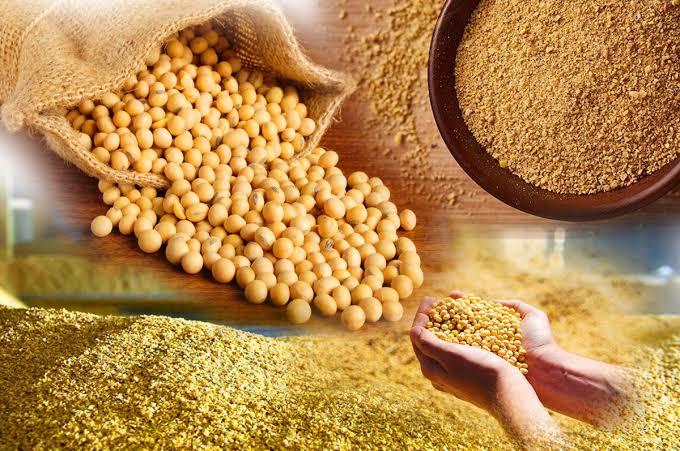
Untoasted Soya DOC (De-Oiled Cake) is a high-protein, heat-sensitive material widely used in feed,
food, and protein extraction industries. Due to its fibrous structure and sensitivity to thermal
degradation, it requires a controlled grinding process that ensures uniform particle size without
damaging proteins or altering functional properties.
The Air Classifying Mill (ACM) system offers a high-efficiency solution for micronizing untoasted
Soya DOC into a consistent fine powder. Its integrated grinding and classification design minimizes
heat generation, maintains protein functionality, ensures narrow particle size distribution, and
delivers high throughput with excellent operational hygiene.
This application note outlines the process flow, technical performance, system advantages, and KPIs
for an ACM plant specifically optimized for Untoasted Soya DOC.
Design and Working Principle
The Soya Grinding line operates on a continuous, automated principle comprising five critical stages:
Step 1: Material Feeding
- Untoasted Soya DOC flakes/cakes are fed using a controlled feeder.
- Ensures:
- Stable and uniform feeding
- Consistent grinding quality
- Prevents mill motor overload
Step 2: Impact Grinding in ACM Rotor
- Rotor operates at 4,000–8,000 RPM.
- Grinding occurs through:
- Impact from hammers/pins
- Shearing against liner
- Air turbulence
- Airflow keeps product suspended, preventing heat buildup.
- Important for preserving heat-sensitive soya proteins.
Step 3: Air Classification
- Material enters dynamic classifier zone.
- Classifier action:
- Fine particles pass through classifier wheel.
- Coarse particles are rejected and returned for re-grinding.
- Ensures:
- Narrow particle size distribution
- Minimal oversize
- Real-time fineness control by changing classifier RPM
Step 4: Pneumatic Conveying & Cooling
- Blower creates conveying loop.
- Functions:
- Transports product through system
- Keeps temperature low
- Improves classifier efficiency
- Prevents:
- Protein denaturation
- Colour change
- Quality degradation
Step 5: Bag Filter & Product Collection
- Bag filter separates powder from air.
- Process:
- Fine particles are collected in bins.
- Ultrafine particles (<5%) are captured in filter bags.
- Clean air is released or recirculated.
- Ensures emissions remain below industrial norms.
Step 6: Product Discharge
- Final soya DOC powder (150–250 microns) is collected.
- Used for:
- Packing
- Blending
- Protein extraction processes
Model Description
(Indicative values based on standard Soya DOC with <1.5% oil)
| Variant | Model | Capacity | Target Fineness |
|---|---|---|---|
| SA-60-MS | ACM 60 MS | 900–1000 Kg/hr | 95% 150–180 Microns |
| SA-100-MS | ACM 100 MS | 1450–1500 Kg/hr | 95% 150–180 Microns |
Key Components
| Component | Function | Key Technical Feature |
|---|---|---|
| ACM Mill (Air Classifying Mill) | Performs grinding and classification of Untoasted Soya DOC | Integrated rotor + classifier, low-heat grinding, adjustable fineness (150–250 µm) |
| Bag Filter System | Captures fine powder and ensures dust-free air discharge | 99% product recovery, pulse-jet cleaning, maintains hygiene |
| Centrifugal Fan (C-Fan / Blower) | Provides airflow for conveying, cooling, and classification | High-volume air delivery, maintains <15°C temperature rise |
| Control Panel (PLC/HMI) | Controls and monitors entire plant operation | VFD for classifier/mill, safety interlocks, real-time parameter monitoring |
| Vibro Shifter (Sieve) | Ensures final particle size consistency and removes oversize | Multi-deck vibration, uniform screening, stainless steel design |
Features & Benefits
- Low-Heat Operation
- Consistent Particle Size Output
- High Product Recovery (>99%)
- Dust-Free, Hygienic Operation
- Energy Efficient System
- Reliable Continuous Operation
- Automation & Easy Control
- Low Maintenance Requirements
- High Throughput Capacity
- Improved Final Product Quality
All components work together to maintain a cool grinding environment, protecting protein integrity of Untoasted Soya DOC.
Integrated mill, classifier, airflow system, and shifter ensure uniform fine powder (150–250 μm).
Efficient separation and dust control minimize material loss throughout the system.
Bag filter, sealed connections, and controlled airflow maintain clean processing conditions suitable for feed/food.
Optimized mill design, high-efficiency fan, and precision automation reduce overall power consumption per ton.
All major components (mill, blower, filters, control panel) are designed for 24/7 industrial duty.
PLC/HMI panel integrates all equipment, providing real-time monitoring, alarms, and simple operation.
Wear-resistant mill internals, self-cleaning bag filter, and vibration-balanced equipment reduce downtime.
System configuration allows consistent processing of 100–2,500 kg/hr depending on model.
Combined grinding, classification, filtration, and sieving enhance powder flowability, purity, and application performance.
Applications
- Animal Feed Formulations
- Protein Extraction Processes
- Food & Nutrition Blends
- Extrusion-Based Products
- Industrial Bio-Processing Applications
(Poultry, cattle, aqua, pet food)
(SPC – Soy Protein Concentrate, SPI – Soy Protein Isolate)
(Soya flour, bakery mixes, protein fortification)
(Texturized vegetable protein – TVP/TSP)
(Fermentation substrate, organic fertilizer base)
Model Variants
| Variant | Model | Capacity | Target Fineness |
|---|---|---|---|
| SA-60-MS | ACM 60 MS | 900–1000 Kg/hr | 95% 150–180 Microns |
| SA-100-MS | ACM 100 MS | 1450–1500 Kg/hr | 95% 150–180 Microns |
Technical Parameters
| Parameters | Details |
|---|---|
| Input Material | • Soya Flakes • Soya Grits • Whole Beans |
| Fineness Range | D90 : 150–250 microns - Adjustable via classifier speed (VFD) |
| Raw Material Moisture | 6–8% |
| Yield / Product Recovery | > 98.5% |
| Sound Level | < 85 dBA - With acoustic insulation |